A Comparative Study Between Wet and Dry Inflatable Slides
Inflatable or bouncing slides are temporary inflatable structures designed for recreational activities, especially for children. These slides are commonly rented for occasions such as school festivals, church events, and town fairs. Being portable and easy to store, inflatable slides are ideal for entertainment and leisure. Their popularity is steadily increasing, and as demand grows, the rental industry is offering a wide variety of slide types, providing children with numerous options for fun.
These slides are inflated using either petrol-powered or electric blowers. The surfaces are typically made of heavy-duty PVC, nylon, or vinyl materials. Skilled manufacturers sew these materials together using multi-filament nylon thread, ensuring long-lasting durability.
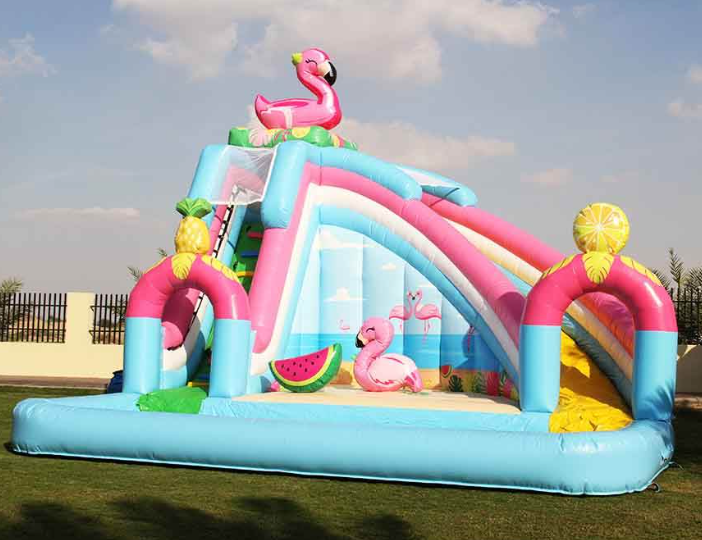
Structure of an Inflatable Slide
Inflatable slides come in various designs and shapes. Once the colors and configuration are decided, the assembly begins.
Every slide has three main components: the body, the climbing ramp, and the slide lane(s). The body serves as a safe base that provides complete structural support for the entire unit. The slide lanes are coated with shiny vinyl to make them extra slippery. The climbing ramp is usually positioned alongside the slide lanes but can also be located at the back or side of the unit. It is designed to allow riders to climb to the top of the slide easily and safely.
Differences Between the Features of Wet and Dry Inflatable Slides
Generally, the design, overall configuration, and construction of wet and dry slides are similar. However, there are some differences between the two types of slides.
Both wet and dry slides are typically equipped with waterproof sheets and splash pools at the base of the slide lanes. Wet slides sometimes include a loop or extension near the top of the slide body to accommodate a water hose. This allows the slide lanes to stay wet, providing a slippery, thrilling experience. Dry slides, on the other hand, may feature a high bumper or an inflatable wall to enhance the fun without using water.
Inflatable wet slides are commonly used in summer and can be connected to a backyard swimming pool. Dry slides are generally used in cooler months, as they do not require water for recreational use.
A wet slide can easily be converted into a dry slide by removing the splash pool, offering incredible versatility for rental and personal use.
Wet slides carry the risk of mold or mildew if water is not properly drained. Dry slides are more convenient to use and store since they do not involve water.
Dry slides are also more popular in schools and backyards because they can be used anywhere, anytime. Wet slides, by contrast, are limited to specific locations where water is available.